Best Affiliate Marketing ProgramsClickBank Explained: What to Check Before You Promote Its Products
ClickBank Explained: What to Check Before You Promote Its Products
The short answer
ClickBank is an online marketplace where vendors list digital products and affiliates earn a commission on sales they refer. Anyone can sign up as an affiliate for free. Because the platform does not check every product closely, you need to judge quality yourself. Look at the vendor, the sales page, the refund policy and the product's refund rate before you promote anything.
Some links on this site are affiliate links: if you buy through one, the site may earn a commission at no extra cost to you. More about this.
If you want to earn from recommendations but you're not sure which programs are worth your time, you are in the right place. ClickBank is one of the first names beginners hear, and it is easy to see why. The sign-up is quick, there is no cost to join, and the catalog is huge. The catch is that a huge catalog includes a lot of weak products, and a weak product can damage your reputation with the people you are trying to help.
This page gives you a clear way to check any ClickBank offer before you put your link on it. You will get a plain look at how the marketplace works, so you know what the platform does and does not do for you. Then you will learn how to read a product's sales page and refund policy, and how to use the refund rate as a warning sign. We will also cover the risks of promoting low-quality offers and how to avoid them.
How the marketplace works: what vendors and affiliates each get from the platform Checking the vendor: what to look for before you trust a name on a product Reading the sales page: the claims that should make you slow down Refund policy and refund rate: what they tell you and where they fall short Risks of low-quality offers: how a bad product can cost you money and trust
What ClickBank Is and How Its Marketplace Works
ClickBank is an online marketplace where vendors list digital products and affiliates promote them. Most of what you will find is ebooks, online courses, software, and subscription-style digital tools. You do not need to buy or stock anything. You share a link, and if someone buys through it, you earn a commission on that sale.
The basic flow looks like this:
- A vendor lists a digital product and sets the commission rate for affiliates.
- You create a free affiliate account and pick products to promote.
- You send people to your link through your content, email list, or social posts.
- When a sale completes, ClickBank tracks it back to your account and pays you.
Commission rates are set by each vendor, so they differ from product to product. One offer might pay a small share and another a much larger one. Do not judge a product by its rate alone.
ClickBank is a marketplace, not a curated program. Anyone can list a product, which means quality varies widely. Some products are solid and useful. Others are thin, overhyped, or built mainly to generate quick sales. Before you promote anything, check the product yourself, look at how refunds are handled, and ask whether you would recommend it to a friend.
You may also see ClickBank Platinum mentioned. This is a separate paid offering for vendors who want extra features for selling their own products. It is not something affiliates need, and you do not have to pay anything to join ClickBank as an affiliate.
How to Sign Up and Get Your First Affiliate Link
If you are new to affiliate marketing, ClickBank is one of the platforms you will run into early. It is a marketplace where sellers list digital products and affiliates promote them for a cut of each sale. Here is the basic setup, step by step.
1. Create a free affiliate account.
Go to the ClickBank site and sign up as an affiliate. Expect to give your name, email address, and mailing address, along with payment details so you can be paid. Read the terms before you agree. Joining the marketplace has no upfront fee for affiliates, and I have not tested any of the paid tiers, so I cannot tell you what they add.
2. Find a product.
Browse the marketplace and look for a product in a category you know something about. Check the product page, the sales page, and any reviews from other affiliates before you commit.
3. Generate your hyperlink with your Tracking ID.
Once you pick a product, the platform gives you a hyperlink. Your Tracking ID is built into that link. Use this exact link when you promote the product, not a shortened or edited version.
Why does the Tracking ID matter?
The Tracking ID tells you which page, post, or campaign sent each sale. Without it, you see a commission but not where it came from. Use a different ID for each placement so you can see what is working and drop what is not. It is a simple habit, and it saves guesswork later.
Free affiliate sign up at a glance
| Item | What the article says |
|---|---|
| Affiliate sign up cost | Free to join |
| Information needed | Name, email, mailing address, payment details |
| Hyperlink | Built with your Tracking ID |
| Paid tiers | Not tested, so effects not stated |
How to Judge Product Quality Before You Promote
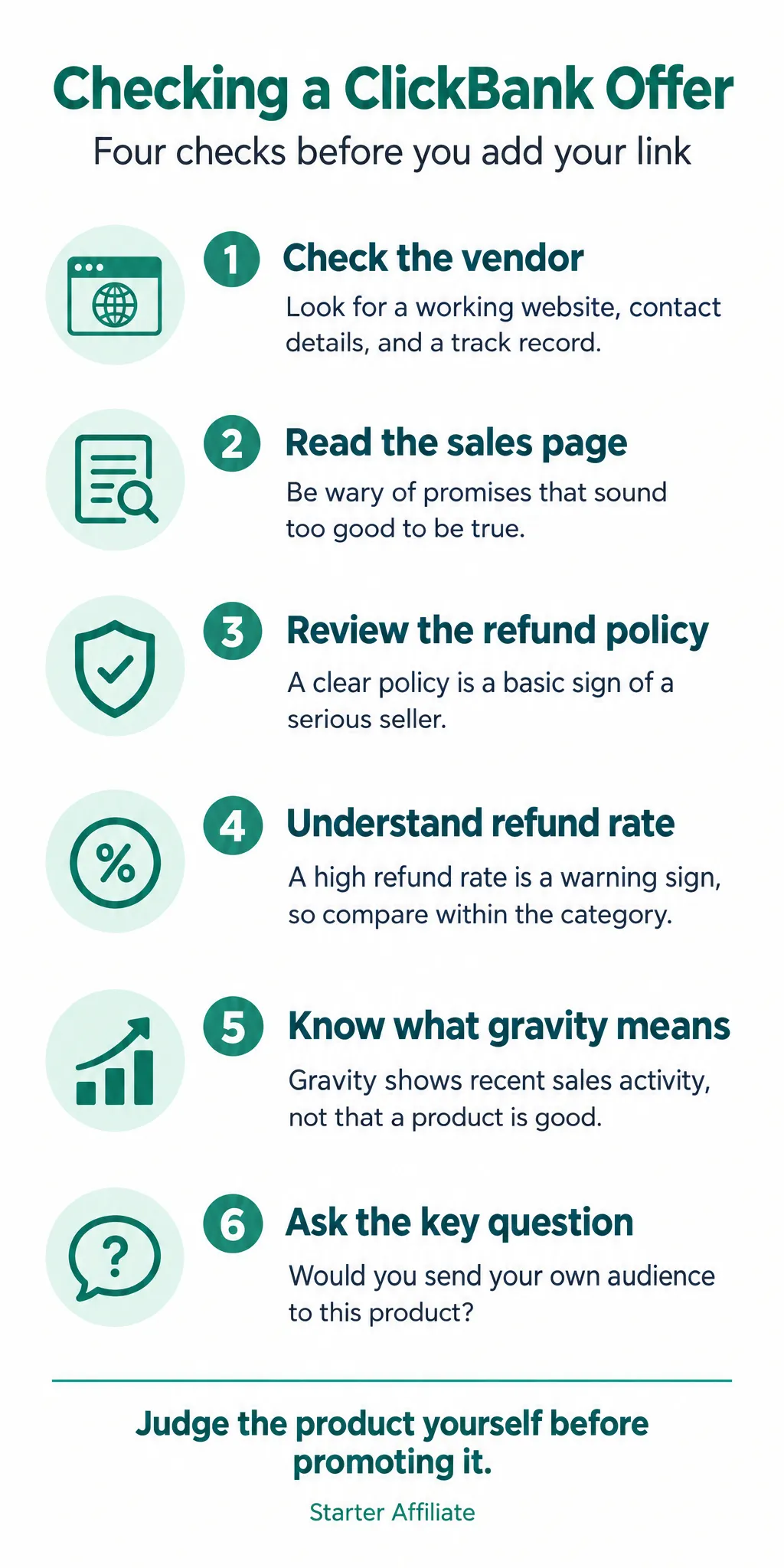
ClickBank is a marketplace where digital products are listed and sold through affiliates. Anyone can list a product there, so the quality varies a lot. Before you promote anything, take a few minutes to check it. The checks below are simple, and most of them need nothing more than a browser.
Start with the vendor, not the offer. Look at who is selling the product:
- Does the vendor have other products, and do they look like real businesses with a consistent focus?
- Is there a working website with an address, a phone number or a contact form?
- How long have they been selling? A vendor with a track record is a safer bet than one that appeared last month.
Read the sales page like a skeptic. Look for claims you can picture being true. "Here is what the course covers, and here is who it is for" is believable. "Make thousands in your sleep" is not. Then open the product itself, if you can, and check that it delivers what the page promises.
Check the refund policy and the support. A clear refund policy is a basic sign of a serious seller. Find the policy and read it. Then send a test question to support. If nobody answers, or the answer is vague, that tells you something.
Ask whether you would send your own audience there. This is the question that matters most. If your readers bought it and felt cheated, would you be comfortable with that? If the answer is no, skip it, even if the commission looks good.
A product that passes these checks still needs your judgment, but it gives you a far better starting point than a commission rate alone.
Refund Rates, Gravity Scores and What They Do and Do Not Tell You
When you browse the ClickBank marketplace, two numbers stand out: gravity and refund rate. Beginners often treat them as a quality check. They are not, and it helps to know exactly what each one measures before you rely on it.
What does gravity actually mean?
Gravity is a score that reflects how many affiliates have recently earned commissions on a product. In plain terms, it tells you that people have been selling it. It does not tell you the product works, that buyers are happy, or that the offer is honest. A high gravity score can mean a crowded product, or a product that has been pushed hard for a while.
Why a high refund rate is a warning sign
A refund rate is the share of sales that customers later return. A high one is a warning. It often points to a product that does not match its sales page. ClickBank lets vendors and affiliates see refund information in their account reports, so check there rather than trusting the marketplace listing alone. Keep in mind that refunds vary by product type, so compare a product against others in the same category.
Why high commission or gravity is not enough
A large commission or a busy gravity score can make an offer look attractive. Neither one shows whether customers are satisfied, whether the product is worth recommending, or whether your audience will trust you afterward. Use these numbers as a starting point for research, not as the reason to promote something.
- Check the sales page and the refund policy yourself.
- Look for recurring complaints in reviews outside the platform.
- Ask whether you would recommend the product to a friend.
What I describe here is how the numbers are defined and how I would read them, not a proven method.
Gravity versus refund rate
| Measure | What it shows | What it does not show |
|---|---|---|
| Gravity | Affiliates recently earning commissions | Whether the product works or buyers are happy |
| Refund rate | Share of sales later returned | Why returns happen or product value |
| Commission rate | Share each vendor pays affiliates | Customer satisfaction or product quality |
Red Flags and the Risks of Low-Quality Offers
ClickBank is a large marketplace, and that size cuts both ways. Plenty of useful digital products are listed there, but so are offers that are weak, misleading, or built mainly to push impulse sales. Before you promote anything, take a few minutes to check the sales page itself.
Watch for these warning signs:
- Income claims with no basis. If a page promises you will earn a set amount in a set time, and gives no way to verify it, treat that as a red flag.
- Countdown timers that reset when you reload the page. Real deadlines are rare on these pages.
- Testimonials with no names, no photos, or vague wording that could fit any product.
- Hidden fees, such as an upsell that appears after checkout or recurring charges buried in fine print.
A poor product does not only cost the buyer. It costs you. When your audience buys something you recommended and feels cheated, they stop trusting your next recommendation. Your reputation as a marketer is built on that trust, and it is slow to rebuild.
What should you do if you already promoted a poor product?
Act quickly and be honest. Remove the link from your content, and take down any posts or emails that push it. Then tell your audience plainly what went wrong and what you have done about it. Most people respect a clear correction far more than silence.
Checking products before you promote them is one of the most useful habits you can build early on.
Realistic Expectations and Next Steps
Most people want to know one thing first: how long until the first sale? The honest answer is that it varies a lot. Some people earn a first commission within weeks. Others go months without one. What decides it is mostly three things: how much traffic you bring, how well the product fits the people who see it, and how much effort you put into creating content and promoting it.
ClickBank does not send visitors to you. It gives you a marketplace of products, tracking links, and a dashboard. The traffic is your job. That might mean a blog, a YouTube channel, an email list, or paid ads. If you have no audience and no plan to reach one, the platform alone will not produce sales.
Before you commit, use this short checklist and save it:
- Check the product's gravity score, refund rate, and vendor history, and look for signs of a problem
- Ask whether you would recommend the product to a friend without the commission
- Confirm you can reach the people who would actually buy it
- Read the vendor's terms and commission details before you promote
- Track clicks and sales from the start so you know what is working
If you are still choosing where to begin, the hub page, Best Affiliate Marketing Programs for Beginners: A Plain Comparison, sets ClickBank next to other options. If you are weighing a low-cost start, read How to Start Affiliate Marketing With No Money. If you are deciding whether to pay for training, see Affiliate Marketing Courses: Are They Worth the Cost?
Frequently asked questions
Is ClickBank a legitimate company?
Yes. ClickBank is an established affiliate marketplace that has operated for many years and connects product sellers with affiliates who promote them. Legitimacy is not the main question, though. The real issue is whether a specific product is worth promoting, so check each offer on its own terms before you sign up to sell it.
How much does it cost to use ClickBank?
Joining ClickBank as an affiliate is free. You create an account and can browse the marketplace without paying a signup fee. Costs come from the tools or products you choose to buy yourself, such as a website host or a paid course. Check the current terms on the official site, since fees and policies can change.
What is ClickBank?
ClickBank is an online marketplace where digital product sellers list their products and affiliates earn a commission by promoting them. You pick a product, get a unique affiliate link, and are paid when someone buys through it. Most listed products are digital, such as ebooks, software or online courses.
Which affiliate is best for beginners?
There is no single best choice for everyone. Beginners usually do better with programs that have clear product quality, reasonable refund rates and simple payout rules. Compare a few options on the hub page and pick one that matches your audience and the products you can honestly recommend.
What should I check before promoting a ClickBank product?
Look at the product page, the sales page and the refund policy. Check the gravity or sales volume shown, read independent reviews, and see whether the seller explains the product clearly. Avoid offers that make big promises about income or that you cannot verify. If the product would not hold up when you recommend it to a friend, skip it.
Wrapping up
ClickBank is a real marketplace, but the quality of each product varies a lot. Before you promote anything, check the product itself, its refund rate and whether the claims hold up. That small amount of checking protects your readers and your reputation. What is the first thing you check before you promote a product? Tell us in the comments. Visit the official site to read the program details for yourself.